문제링크
https://school.programmers.co.kr/learn/courses/30/lessons/12913
프로그래머스
SW개발자를 위한 평가, 교육의 Total Solution을 제공하는 개발자 성장을 위한 베이스캠프
programmers.co.kr
문제 핵심
1행부터 땅을 밟으며 한 행씩 내려올 때, 각 행의 4칸 중 한 칸만 밟으면서 내려와야 합니다. 단, 땅따먹기 게임에는 한 행씩 내려올 때, 같은 열을 연속해서 밟을 수 없는 특수 규칙이 있습니다.
마지막 행까지 모두 내려왔을 때, 얻을 수 있는 점수의 최대값을 return하는 solution 함수를 완성해 주세요.
알고리즘
-두줄씩 같은 열제외하고 더함
해당 행에 열끼리 더한값을 묶음
해당 좌표의 최고합만 구함
그리고 최고가를 매번 갱신함
코드
static int solution(int[][] land) {
int answer = 0;
int index = 0;
int[] maxs = new int[land[0].length];
boolean first = true;
while (index < land.length - 1) {
Map<Integer, Integer> tempMaxs = new LinkedHashMap<>();
for (int i = 0; i < land[0].length; i++) {
for (int ii = 0; ii < land[0].length; ii++) {
if (i == ii) {
continue;
}
int nmax = 0;
if (first) {
System.out.print(" 처음임");
System.out.println("연산예정: " + land[index][i] + " + " + land[index + 1][ii]);
nmax = land[index][i] + land[index + 1][ii];
if (tempMaxs.containsKey(ii)) {
    if (tempMaxs.get(ii) < nmax) {
        tempMaxs.put(ii, nmax);
    }
} else {
    tempMaxs.put(ii, nmax);
}
} else {
System.out.println("연산예정: " + maxs[i] + " + " + land[index + 1][ii]);
nmax = maxs[i] + land[index + 1][ii];
if (tempMaxs.containsKey(ii)) {
if (tempMaxs.get(ii) < nmax) {
tempMaxs.put(ii, nmax);
}
} else {
tempMaxs.put(ii, nmax);
}
}
}
}
System.out.println("최고값후보현황: " + tempMaxs);
for (Map.Entry<Integer, Integer> entry : tempMaxs.entrySet()) {
int idex = entry.getKey();
int max = entry.getValue();
if (maxs[idex] < max) {
maxs[idex] = max;
}
if (answer < max) {
answer = max;
}
}
tempMaxs.clear();
System.out.println("최고값현황: " + Arrays.toString(maxs));
first = false;
index += 1;
}
System.out.println(answer);
return answer;
}
결과
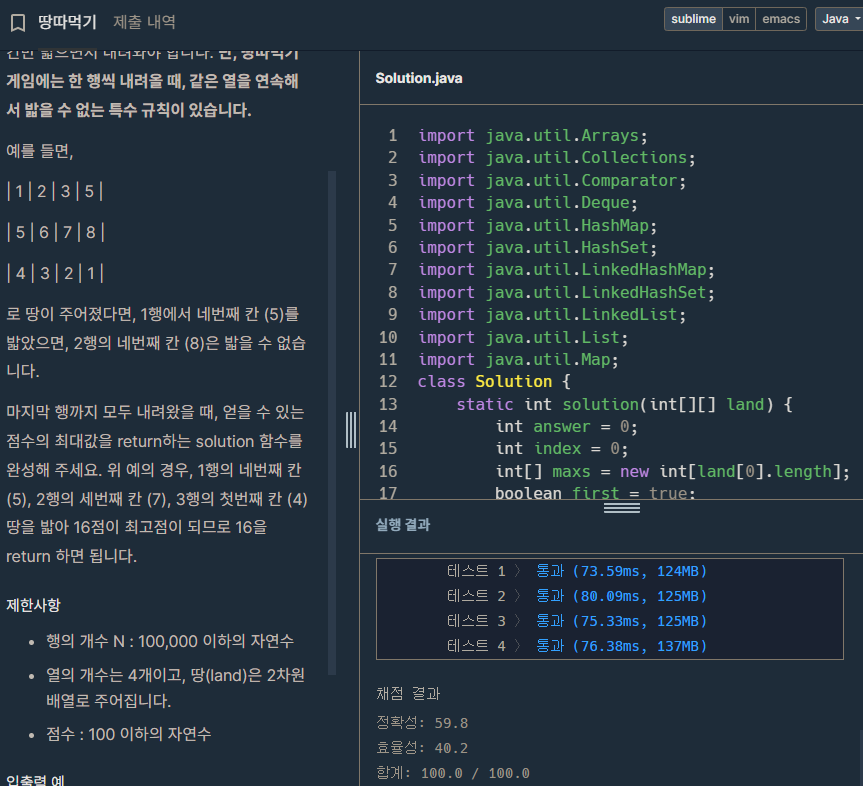
gpt피드백
알고리즘
알고리즘은 적절해. 핵심을 제대로 잡았어.
코드에서 가장 크게 개선할 부분
지금은 Map도 사실 필요 없어.
Map<Integer, Integer> tempMaxs = new LinkedHashMap<>();key가 무조건 0,1,2,3이잖아. 그러면 그냥:
int[] tempMaxs = new int[land[0].length];이면 돼.
그러면 이 코드:
if (tempMaxs.containsKey(ii)) {
if (tempMaxs.get(ii) < nmax) {
tempMaxs.put(ii, nmax);
}
} else {
tempMaxs.put(ii, nmax);
}가 그냥:
tempMaxs[ii] = Math.max(tempMaxs[ii], nmax);한 줄이 돼.
first도 없앨 수 있음
지금 first가 필요한 이유는 최초에 maxs가:
[0, 0, 0, 0]이기 때문이잖아.
처음부터:
int[] maxs = land[0].clone();하면:
[1, 2, 3, 5]로 시작할 수 있어.
후기
-2틀동안 고민했다
1차시도 그냥 dfs로 구현-시간초과
gpt조언 모든 경우의 수를 돌필요없다 왜?
어차피 해당수에 도착한 수들은 다음 과정은 똑같다
조언을 듣고 다시 생각해봤다
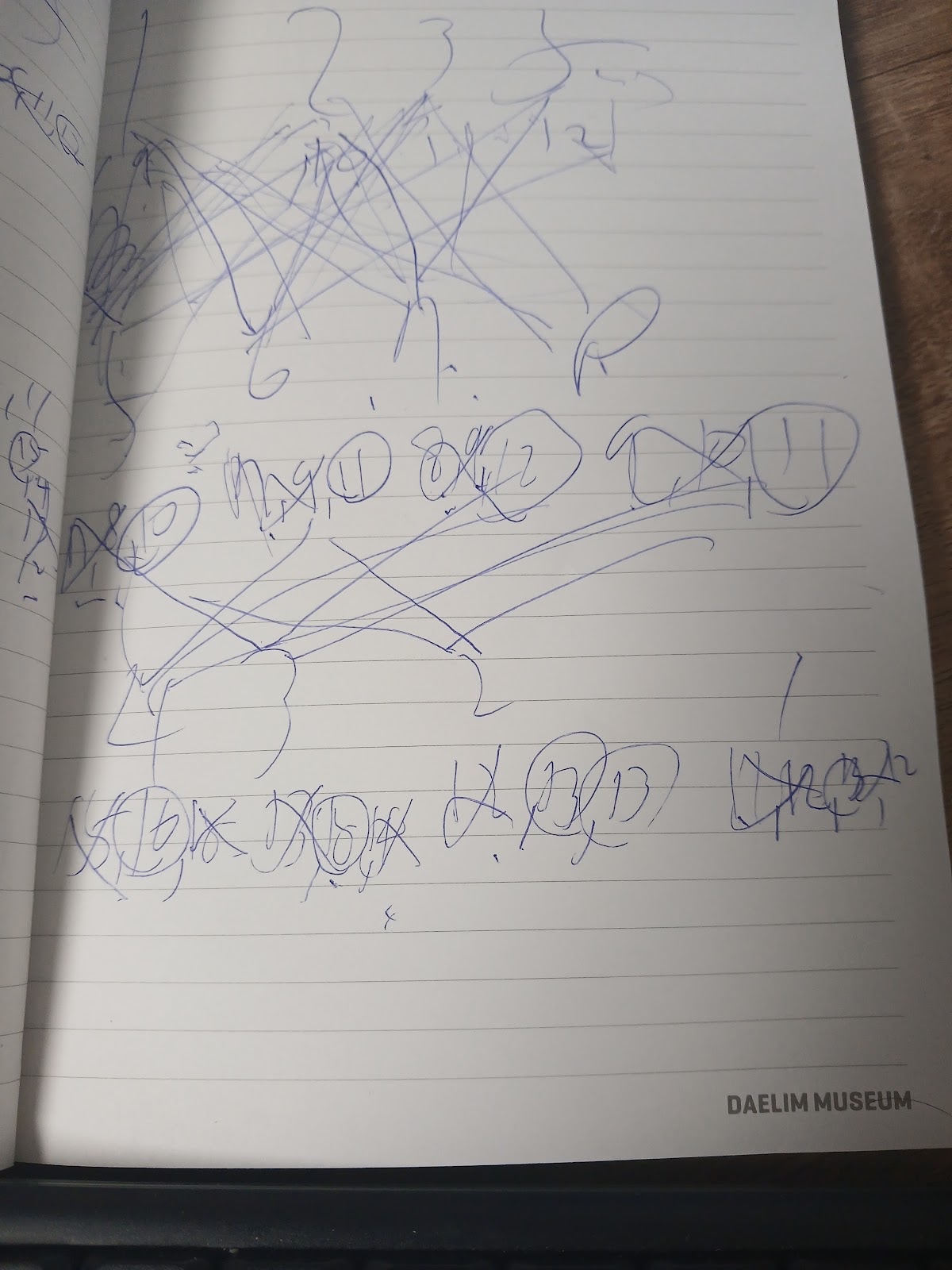
어 결국 그러면 해당 경로의 최고값들로만 했으면 되는구나 하고
구현 하고 통과했다 아 어려웠다.
'코테 > lvl2' 카테고리의 다른 글
| 프로그래머스 쿼드압축 후 개수 세기(lvl2) 풀어보기 (0) | 2026.10.08 |
|---|---|
| 프로그래머스 2 x n 타일링(lvl2) 풀어보기 (0) | 2026.09.28 |
| 프로그래머스 멀리 뛰기(lvl2) 풀어보기 (0) | 2026.09.26 |
| 프로그래머스 N개의 최소공배수(lvl2) 풀어보기 (0) | 2026.09.26 |
| 프로그래머스 마법의 엘리베이터(lvl2) 풀어보기 (0) | 2026.09.26 |